What Nobody Tells You About Running an Airbnb in Cape Town
Written by Daniel Blaauw
Running an Airbnb in Cape Town has changed dramatically over the past decade. While it can appear relatively straightforward from the outside, the operational reality behind a high-performing short-term rental is far more sophisticated than many owners initially expect.
Scroll through a handful of Airbnb listings in Cape Town and it’s easy to see the appeal of considering listing your spare room. A few well-lit photographs, a calendar that fills up through summer, a string of five-star reviews thanking the host for a lovely stay. It looks like a business that mostly runs itself: list the property, let the bookings come in, show up occasionally to make sure everything is in order. Plenty of owners go into hosting believing exactly that, and for the first booking or two, it can even feel true.
What nobody tells you is what sits underneath that calendar. Behind every "lovely stay" review is a price that someone adjusted that week because the market moved, a cleaning team who turned the property around in a two-hour gap between a late checkout and check-in, a maintenance call made before the guest ever noticed anything was wrong, and a dozen smaller decisions that never make it into a review because they simply just worked. The guest experiences none of this. They experience a property that feels effortless, which is precisely the point: the more invisible the work, the better the stay.
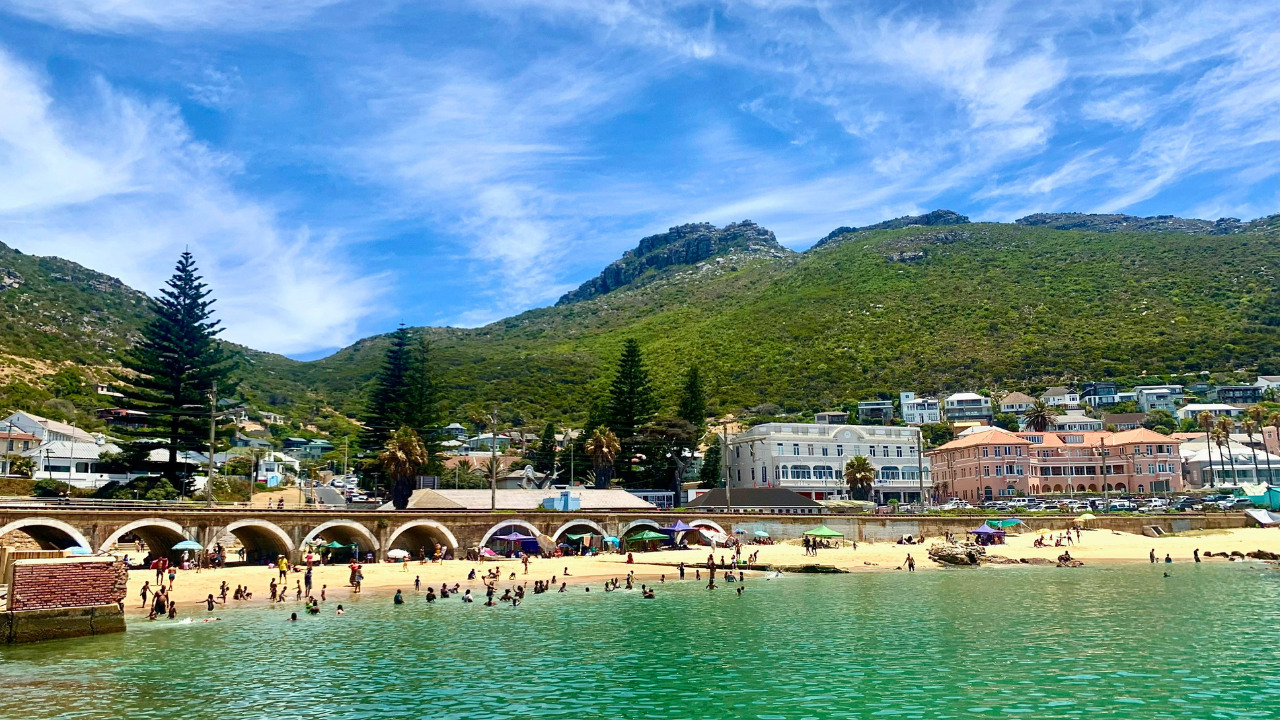
This is also where the gap between expectation and reality tends to open up for those newly invested in the Airbnb platform. A guest checking into a flat in Muizenberg this month has, more likely than not, already stayed in Lisbon this year, and in Bali before that, and in a converted warehouse two suburbs over in Cape Town before that. Each of those stays reset, in some small way, what "good" is supposed to feel like. Running an Airbnb well today has far less in common with renting out a spare room than it does with operating a small hospitality business, where every guest arrives carrying expectations set somewhere else entirely, and every stay adds to, or chips away at, a reputation that takes years to build and one bad week to dent.
If you're considering handing these responsibilities to a professional, our guide to
choosing an Airbnb property manager in Cape Town outlines the questions worth asking before you commit.
Key Takeaways:
- Running a successful Airbnb involves far more than guest communication and housekeeping coordination.
- Many of the factors that influence reviews, occupancy, and revenue are largely invisible to guests.
- Modern Airbnb management increasingly relies on systems, data, operational oversight, and continuous refinement.
- Professional management provides owners with access to market intelligence, pricing expertise, and operational support that can be difficult to replicate independently.
- The strongest-performing properties are often supported by dozens of small decisions working together consistently over time.
In this article:
- What New Airbnb Owners Need to know
- Why Your Airbnb Needs Continuous Management
- The blind spot every individual Airbnb owner shares
- Why Cape Town's Airbnb Market Continues to Grow
- Why More Owners Are Treating Airbnb as an Investment
- The Value of Professional Airbnb Management
- Why Peace of Mind Is the Greatest Return
What new Airbnb owners need to know
Ask a host a year into it what actually surprised them, and the answer is rarely a guest story. It is almost always the sheer number of small, recurring decisions a property demands of its owner, week after week, long after the novelty of that first booking has worn off. A few realities that tend to land hardest:
- The rate you set on day one is wrong within a few weeks, and you won't know it. Muizenberg's market currently moves on a 14-day median booking window*, which means demand for a given night is mostly visible only two weeks out. An owner who checks pricing monthly is, in effect, setting prices blind for three weeks out of every four. They don't see the gap because there's nothing to compare it to: a slow week just looks like a slow week, not like a week where the rate was too high. Our Cape Town Airbnb performance data shows how this pricing gap translates into roughly R40,000 in lost revenue per property over a single peak season.
- Visibility costs money, and most owners aren't spending it. A listing doesn't rank well on Airbnb or Booking.com by accident. It takes professional photography, a listing description optimised for search, and active management of how the property shows up across multiple platforms at once, work that's ongoing, not a once-off setup task. Individual owners rarely have the budget, time or understanding to do this properly, which means two identical properties can get very different amounts of search visibility for reasons that have nothing to do with the property itself.
- Guests don't compare you to the place down the road. They compare you to the best Airbnb they've ever stayed in, anywhere. A guest arriving in Muizenberg has probably stayed somewhere in Vietnam or Portugal in the last year or two. That's the bar, not "nice for this part of Cape Town." Reviews read harshly when a stay falls short of a standard the owner never knew they were being measured against.
- What gets complained about isn't what owners spend money on. Owners tend to invest in the things that show up in photos: furniture, finishes, the view. Across the Muizenberg market, the features guests actually ask for most and find missing most often are cheap and unglamorous: working essentials, a hairdryer that's actually there, a straightforward way to drop bags off before check-in. A R200 hairdryer fixes more reviews than a new headboard.
- Going from half-full to nearly-full doesn't mean twice the work. It can mean three or four times the work, because the gaps disappear. At 35% occupancy, there's usually a day or two between guests to fix anything that went wrong, restock, or recover from a late checkout. At 69%, roughly the Muizenberg average, those gaps shrink to almost nothing. Every turnover has less slack, so problems that used to get absorbed quietly between bookings now show up in the next guest's stay instead.
None of this is complicated to address individually. A price adjustment takes minutes. Answering an enquiry takes less. What makes hosting genuinely demanding is the requirement that dozens of these small, manageable tasks happen correctly, continuously, often at the same time, across a calendar that never stops moving.
It's also, in fairness, where the opportunity lives. The properties that consistently outperform their neighbours are rarely coasting on one standout feature. More often, they're the sum of hundreds of ordinary decisions made well and repeated without fail, until the accumulation becomes its own advantage. Seen this way, a holiday home stops looking like a fixed asset that occasionally hosts a guest, and starts looking like something closer to a living business, one that has to keep adjusting to stay ahead of a market, and a set of guest expectations that are constantly evolving.
*
Source: PriceLabs Muizenberg whole-market data, June 2026.
Why Your Airbnb Needs Continuous Management
Two properties can sit on the same street, offer near-identical amenities, attract a similar type of guest, and still produce wildly different results over a year: one consistently booked, well reviewed, commanding a premium rate; the other limping along at the same price with half the occupancy. From the outside, this is genuinely puzzling. The answer rarely lies in anything visible.
Most owners, understandably, pour their attention into what can be seen: the furniture, the photography, the view, the finish. These choices matter, and dismissing them would be a mistake. But they're also the easiest part of the equation to get right, and the part where competitors are easiest to match. What separates the properties that pull ahead is almost always what happens after the listing goes live and nobody's watching: how often pricing actually gets revisited rather than left to drift, how quickly a guest message gets a reply, whether feedback from last month's stay became this month's small upgrade, whether a maintenance issue was caught before a guest had to mention it.
These differences are individually minor and collectively enormous. Properties under professional management tend to widen this gap the longer they operate, not because of where they sit or what they look like, but because someone is paying continuous attention to the parts of the business that are easy to neglect and hard to notice from a single stay.
Worth keeping in mind here: Muizenberg's market is still overwhelmingly made up of small-scale and individually run listings rather than large managed portfolios. Which means an owner benchmarking themselves against "the market" is, more often than not, really benchmarking against other independent hosts facing the exact same complexity alone, not against some professionalised standard that has already solved it.
The blind spot every individual Airbnb owner shares
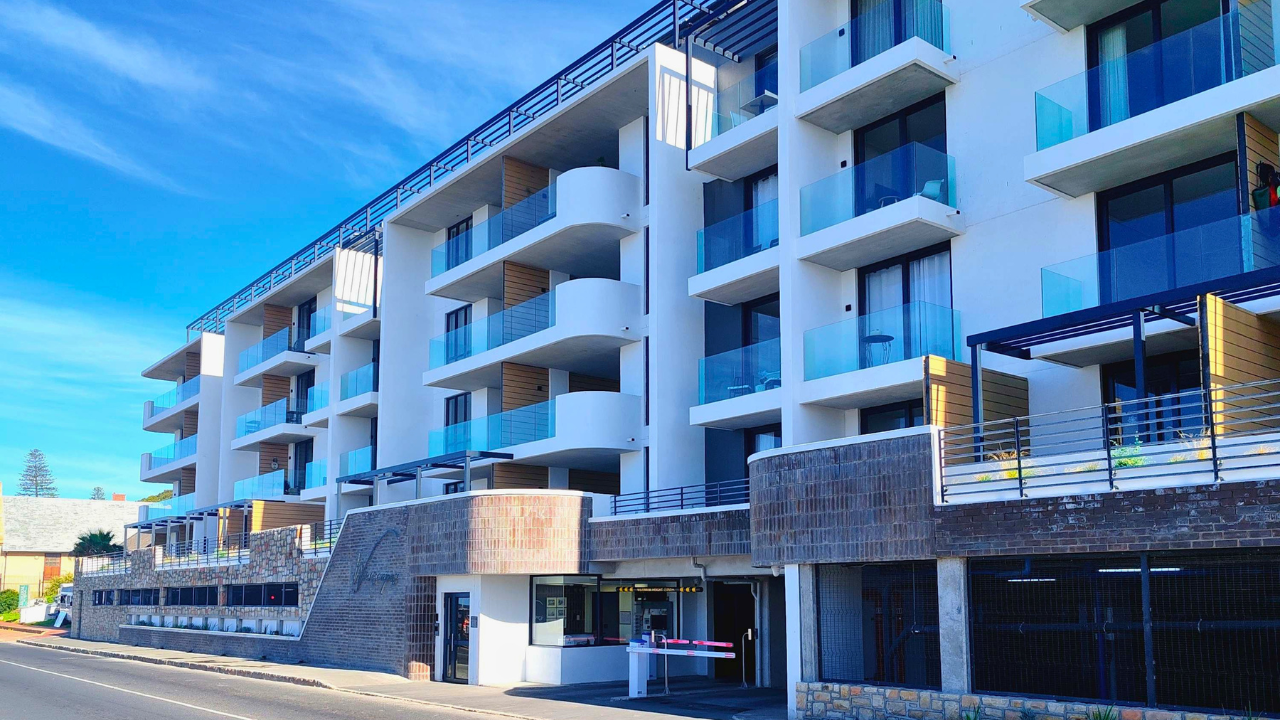
An owner with one property sees one set of bookings, one occupancy rate, one set of reviews. That's the entire picture available to them. A management company running 50 properties across Cape Town sees 50 versions of that picture at once, which means they can spot things a single owner structurally cannot: that bookings for a specific weekend are coming in slower than usual across the whole area, that a particular amenity is suddenly showing up in more guest enquiries, that a competitor two streets over just dropped their rate and is about to take your booking.
That same scale applies to marketing. A single owner can list a property and hope it gets found. A management company is actively promoting an entire portfolio at once, professional photography, listing copy built around what guests actually search for, a consistent presence across platforms, and a brand that guests start to recognise and trust across multiple properties. That's not something an individual owner can reasonably fund or maintain alone, and it shows up directly in how often a listing gets seen before a guest even reaches the price.
This means an individual owner's picture of the market is narrow: their bookings, their reviews, their occupancy; all viewed in isolation. A professional operator's picture is built from dozens of these vantage points at once, tracking how demand shifts by season, how guest expectations move year over year, how comparable properties perform across different pockets of the same neighbourhood. Patterns nearly invisible from inside a single listing become obvious the moment you can see fifty of them side by side.
Pricing makes the point well. Plenty of owners still treat it as something close to guesswork dressed up in a spreadsheet: a base rate, a glance at what the place down the road is charging, a seasonal bump for December. The market itself has moved well past that. Right now in winter, the Muizenberg market is running an average daily rate near R1300 against 69% occupancy*. Put together, that works out to roughly R893 in average nightly revenue per available night, a number that matters more than the headline rate, because a high rate with low occupancy can earn less than a moderate rate that's consistently booked. These figures shift by the week as new bookings land and the booking window stretches or contracts.
Pricing intelligence has become less of a nice-to-have and more of a baseline expectation, mostly because the market it's trying to track refuses to stay in one place for long.
*
Source: PriceLabs Muizenberg whole-market data, June 2026.
Why Cape Town's Airbnb Market Continues to Grow
Behind all of this sits a genuinely good news story.
One of the strongest signals emerging from current market data is that tourism demand continues building across South Africa and Cape Town.
The country recently recorded its strongest tourism performance since the pandemic, welcoming more than 10.5 million international visitors during 2025, a 17.6% increase on the year before and a national record*. Current arrival trends suggest international visitor numbers could comfortably exceed 11.5 million during 2026; a trajectory like that doesn't simply add up to more visitors. It changes the calculation for what a well-run property in a desirable location can realistically expect to earn. For owners already in the market, understanding how guest expectations have shifted is becoming just as important as the demand figures themselves.
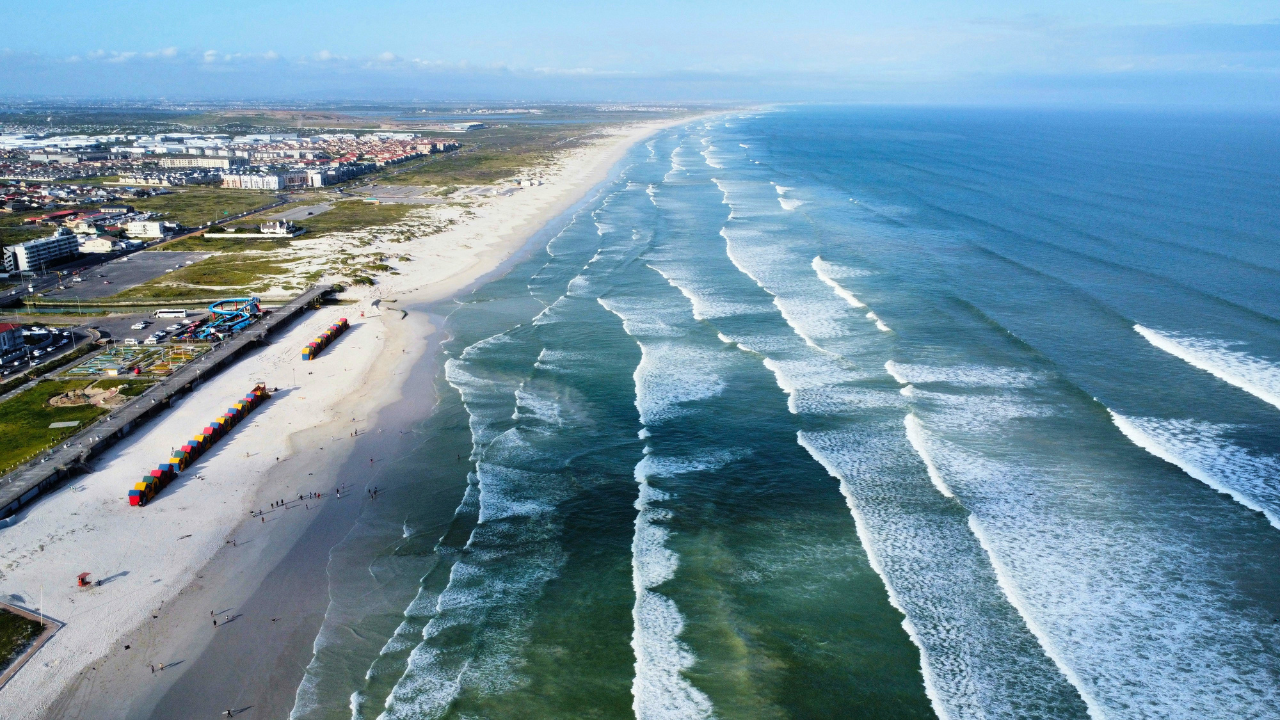
Muizenberg in particular sits well inside this tailwind, helped along by growing international name-recognition, a steady rise in longer-stay travellers, and real investment landing in the area's infrastructure and public spaces. The planned redevelopment of the Muizenberg beachfront will only sharpen this further, with the major beachfront promenade works set for completion in December 2026.
The question worth asking has shifted, in other words. It's no longer whether demand exists, because it plainly does and shows little sign of slowing. It's whether a given property is actually positioned to take advantage of it, and this is where professional management earns its place, not as a convenience or an excess, but as the key factor standing between a potentially successful property and the demand sitting right in front of it. An owner working with a management team isn't paying for someone to answer messages. They're buying access to market intelligence, pricing judgment, and a level of attention that a property competing for travellers with dozens of other stays under their belt now effectively requires.
* Source: South African Department of Tourism, January 2026.

Why more owners are treating Airbnb as a long term investment rather than a side hustle
The way owners talk about their properties has changed noticeably over the past few years. It was once common, and perfectly reasonable, to treat a holiday home as something that earned a bit extra over the busy months, propped up informally by a family member who could let guests in when needed, with little structure beyond that. Owners also face a changing regulatory landscape. Our breakdown of Cape Town's 2026 rates policy explains the commercial reclassification, what it costs, and the timeline for when it takes effect.
That arrangement has aged poorly as expectations have risen and the upside has become harder to ignore. More owners now treat their listing the way they'd treat any other asset worth protecting: watching guest experience closely, refining pricing rather than setting it and forgetting it, paying attention to presentation and upkeep with an eye to long-term value rather than this season's booking calendar alone.
Underneath that shift is a fairly simple realisation: nothing about strong performance comes from one good decision. It comes from many ordinary ones, repeated without fail, for long enough that they start to compound. Pricing tracks demand instead of lagging behind it. Feedback gets acted on instead of filed away. The property keeps pace with what visitors expect instead of catching up to it months later. Occasional attention can't replicate this. Structure can, which is exactly the gap professional management tends to fill.
The Value of Professional Airbnb Management
Revenue tends to dominate the conversation around Airbnb performance, and understandably so. But talk to owners who've worked with a management team for a while, and what they often mention first isn't the numbers. It's the absence of worry, the sense of a problem no longer being theirs to carry alone.
A property in active use throws off a steady stream of small demands: a guest arriving at an odd hour, a booking that needs a quick reply, a maintenance issue that can't wait, a price that needs revisiting before the weekend. Each of these is manageable on its own. What erodes an owner's time and patience is the requirement that all of them happen reliably, often at once, without the standard slipping. That's a different kind of difficulty altogether, less about any single task and more about sustaining attention across all of them simultaneously.
Handing that over to a team that does it full-time changes the shape of ownership considerably. There's a particular kind of relief in knowing a guest message will be answered properly without you having to draft it from an airport lounge, in trusting that pricing is being watched even when you're not looking at it yourself, in knowing a small maintenance issue gets caught before it becomes the subject of a review. What that buys back, more than anything, is time: the ability to hold a property at arm's length without it losing momentum, fully active and well represented, while someone else carries the operational weight that performance actually depends on.
Why Peace of Mind Is the Greatest Return
The properties that do well over time are rarely explained by the listing alone. What lies underneath that performance are the systems, the strategy, and the continuous corrections made along the way, long before anyone ever clicked through to book.
This, in the end, is what professional management actually solves, and it isn't only convenience. It's a structural advantage built from experience, market visibility, and the discipline to keep doing the unglamorous work consistently, season after season. As Cape Town's market keeps shifting, the owners who come out ahead tend to be the ones who accepted early that good performance was never going to happen by accident. It gets built, deliberately, one decision at a time.
At Mui Stays, that's what we deliver: real peace of mind to you. Your property earns what it should because it's being professionally managed the way your investment deserves.
If you're serious about getting the most out of your property, we invite you to join the top 5% of properties in Cape Town.
Get your free property consultation and find out what your property could be earning with the right team behind it. Anyone can list a property. Partnering with Mui Stays is what makes it perform.