Surfing in Cape Town: Why Muizenberg Is In a League of Its Own
Written by Nic Taylor
The complete guide to surfing in Muizenberg
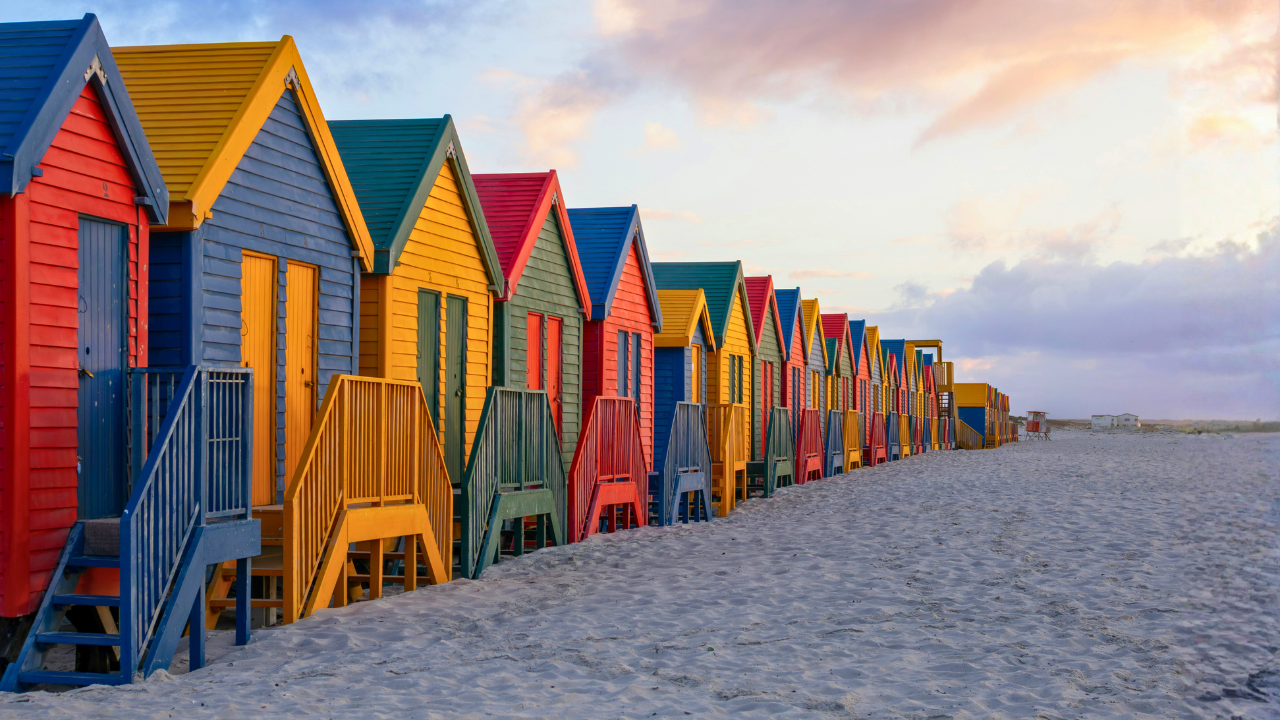
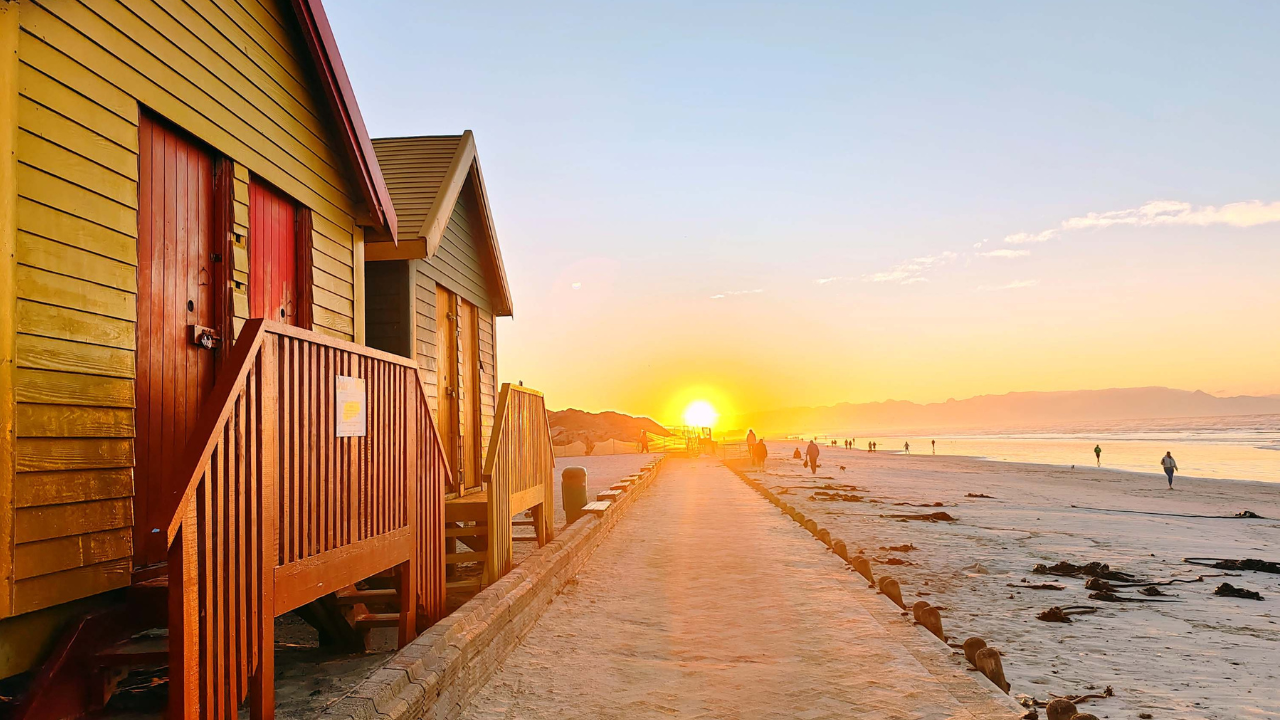
False Bay catches the sun first, long before it reaches the rest of the city, and for a few minutes every morning Muizenberg looks like it is on fire. The water turns copper, then gold, then the pale blue that holds for the rest of the day, and somewhere in that short window the first surfers are already paddling out, cutting black lines across all that colour like they have somewhere urgent to be. By the time the morning light settles in, the beach is in full motion: boards everywhere, groups chatting in queues for coffee, someone's laugh carrying further than it should across the water. Between sessions, the dining scene runs from R80 market plates to Mozambican seafood and Mexican-inspired dinners. Our Muizenberg restaurant guide covers the full spread by budget, occasion and dietary need. This is a town that has spent over a hundred years organising itself entirely around this one daily event, and after six years of living here, I still find it spectacular every time I see it.
One thing I have noticed, again and again, is a particular pattern among the surfers who come here. Someone arrives for a short surf trip, and somehow finds a reason to stay on, an extra week, then another, sometimes far beyond what they originally booked. It happens often enough at Muizenberg that it barely raises an eyebrow anymore, just another traveller who came to surf and could not quite bring themselves to leave. From the outside it always struck me as a strange kind of loyalty for a sport that, on paper, you can do almost anywhere there is a coastline and a board. It took watching this happen over and over, more than anything else, to make me actually go looking for what makes this particular stretch of False Bay different.
Key Takeaways:
Muizenberg, on the False Bay coast of Cape Town's South Peninsula, is one of the world's most accessible and rewarding places to learn to surf. Its unique sandbank geography creates multiple wave breaks spread across kilometres of coastline, producing long, forgiving rides that reform multiple times before reaching shore. Cape Town's two-coastline geography means surfable conditions exist somewhere on the peninsula almost every day of the year, and a surf culture that is genuinely welcoming to beginners makes Muizenberg something very few surf destinations anywhere in the world can match.
Winter is the best season for beginners. No equipment is needed. Accommodation ranges from Muizenberg beachfront guesthouses to self-catering properties throughout the South Peninsula, browse
MUi STAYS for the perfect trip.
In this Guide:
- Why Cape Town is a genuinely remarkable surf destination
- The best time of year to visit Cape Town for surfing
- What a surf break is, and why Muizenberg has so many of them
- How the wave works, and why beginners do so well here
- The surf culture at Muizenberg, and why it matters
- Sharks: what you actually need to know
- Beyond surfing: the South Peninsula as a reason to book flights
- Where to stay for a Cape Town surf trip
Muizenberg surf conditions at a glance
- Best months for beginners: May to September (winter), when north-westerly winds blow offshore over False Bay and produce the cleanest, most consistent swell
- Water temperature: 14 to 16°C in winter (June to August), 18 to 22°C in summer (December to February)
- Wetsuit: a 4/3mm fullsuit for winter sessions, a 3/2mm fullsuit for summer. Most surf schools include wetsuit hire in the lesson price
- Wave height for beginners: 0.3 to 1 metre (1 to 3 feet). The whitewater reform zone is rideable at almost any swell size
- Best tide: low to mid tide, when the sandbanks are at their shallowest and the wave peels most slowly
- Board: soft-top longboard (8 to 9 feet). Every surf school and rental shop on the beachfront carries them
- No equipment needed: all surf schools provide boards, wetsuits and instruction
Why Cape Town is a genuinely world-class surf destination
Stretch a map of the Cape Peninsula out flat and something immediately stands out. The land narrows to a long, thin finger pointing south, flanked on each side by completely different bodies of water. To the east, False Bay opens wide and shallow, its north-facing shoreline taking in Muizenberg, St James, Kalk Bay, Fish Hoek and Simon's Town in a long, sheltered arc. To the west, the Atlantic seaboard runs cold and exposed, facing the open ocean through Kommetjie, Noordhoek and Scarborough all the way down to Cape Point. Two coastlines, separated by a ridge of mountain, facing directions different enough that they rarely experience the same conditions at the same time.
For surfers, this geography is the whole story.
Wind direction determines the quality of a wave in ways that take a while to fully appreciate. When wind blows offshore, from the land out to sea, it does something extraordinary to a breaking wave: it holds the face open, combs the surface into clean lines, and organises incoming swells into the kind of consistent, well-shaped sets that surfers wake up early and drive long distances for. When wind blows onshore, from the sea towards the land, the wave face gets pushed and textured from the front, creating choppy, unpredictable conditions where reading a wave cleanly becomes genuinely difficult.
Cape Town's dominant summer wind is the south-easter, the Cape Doctor, a strong and persistent wind that sweeps across the city from roughly October through March. In summer, the south-easter blows onshore over False Bay, pushing into Muizenberg from the sea and roughening the afternoon conditions considerably. That same south-easter, crossing the mountain spine and reaching the Atlantic side, arrives as an offshore wind, holding the wave faces clean and producing excellent conditions at spots like Long Beach at Kommetjie and the beaches running south towards Scarborough. The same day, the same wind, two completely different surfing experiences on either side of the peninsula.
The best time of year to visit Cape Town for surfing
In winter the system reverses. The prevailing wind shifts to the north-westerly, which blows offshore over False Bay and produces the clean, consistent swells that give Muizenberg its best conditions of the year. Winter in Muizenberg, during what many visitors imagine as off-season, is when the surf regularly fires. The crowds thin, the swell becomes more reliable, and the mornings at Surfers Corner have a particular quality that regulars return for well before the sun comes up.
For anyone planning a surf trip to Cape Town, this means the peninsula functions almost like two destinations in one. Surfers who know the area check both coastlines each morning, read the forecast and the wind, and make a decision. On the days when False Bay is clean and offshore, Muizenberg delivers. On the days when the south-easter is up and the Atlantic side is firing, Long Beach or Kommetjie beckon. Almost every day of the year, there is somewhere on this peninsula producing rideable, quality surf.
For planning purposes, the best months to surf Muizenberg as a beginner are May through September. The north-westerly winds are most consistent during this period, the crowds are thinnest, and the swell direction produces the long, clean rides the beach is known for. Summer (October to March) still offers surfable days, particularly in the mornings before the south-easter picks up in the afternoon, but conditions are less reliable and the water can get busy. For experienced surfers chasing bigger swell on the Atlantic side, winter is equally the prime season at Long Beach and Kommetjie.
What is a surf break? This is what makes Muizenberg special
The term surf break comes up constantly around Muizenberg, and understanding it properly unlocks everything else about why this beach works so well.
A break is the specific place where a wave becomes rideable. Waves travel across the open ocean as swells, long pulses of energy moving through deep water, relatively flat and largely invisible from shore. When that swell hits a shallow area, whether a reef, a rock shelf, or a sandbank, the energy has nowhere to go but up. The wave steepens, pitches forward, and breaks. That moment, where the swell transforms into a rideable wall of water, is the break, and its character is entirely shaped by what sits beneath it. A sharp reef produces a fast, hollow, powerful wave that demands precision and experience. A gradual sandbank produces something slower, more forgiving, with more room for error and more time to find your feet. The personality of any surf spot is essentially a portrait of its seabed.
Most surf beaches, including many that are internationally famous, have one or two consistent breaks. All the action concentrates at one or two defined peaks, the crowd gathers there, and the whole dynamic of a session is shaped by that single point of competition. Beginners paddling out at those spots find themselves sharing tight space with experienced surfers, learning etiquette and pecking order before they have ridden a single wave.
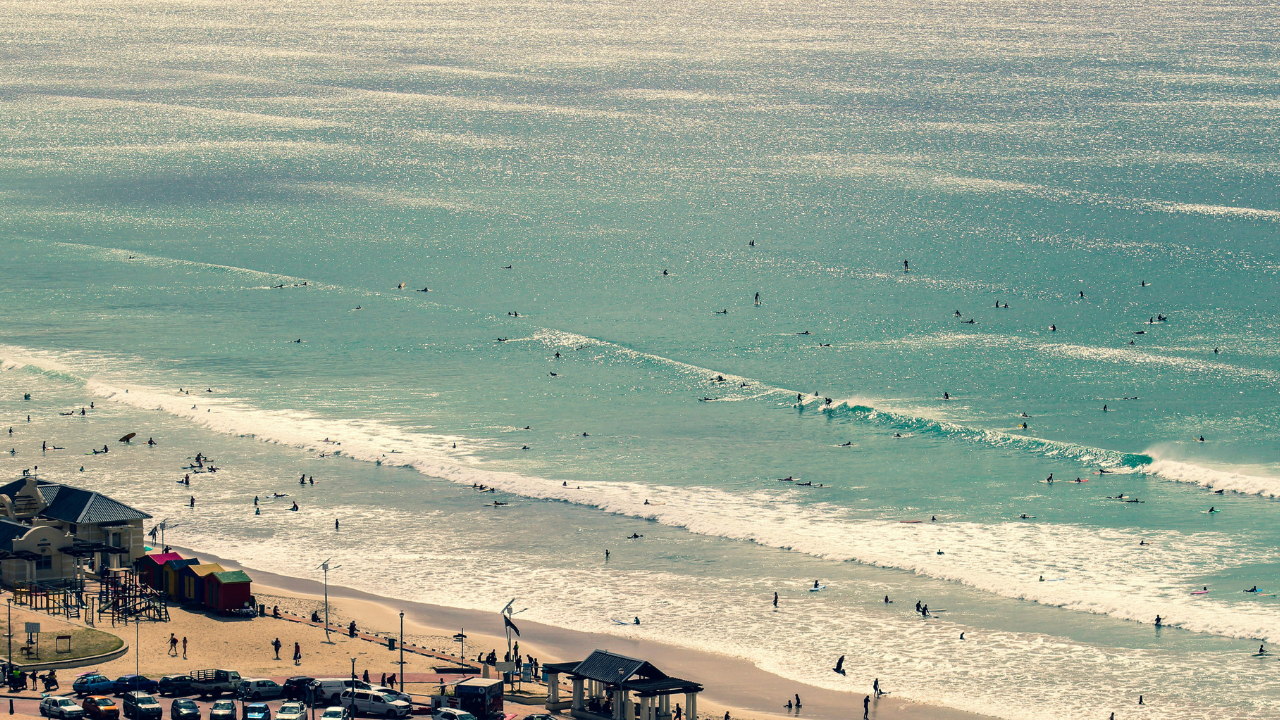
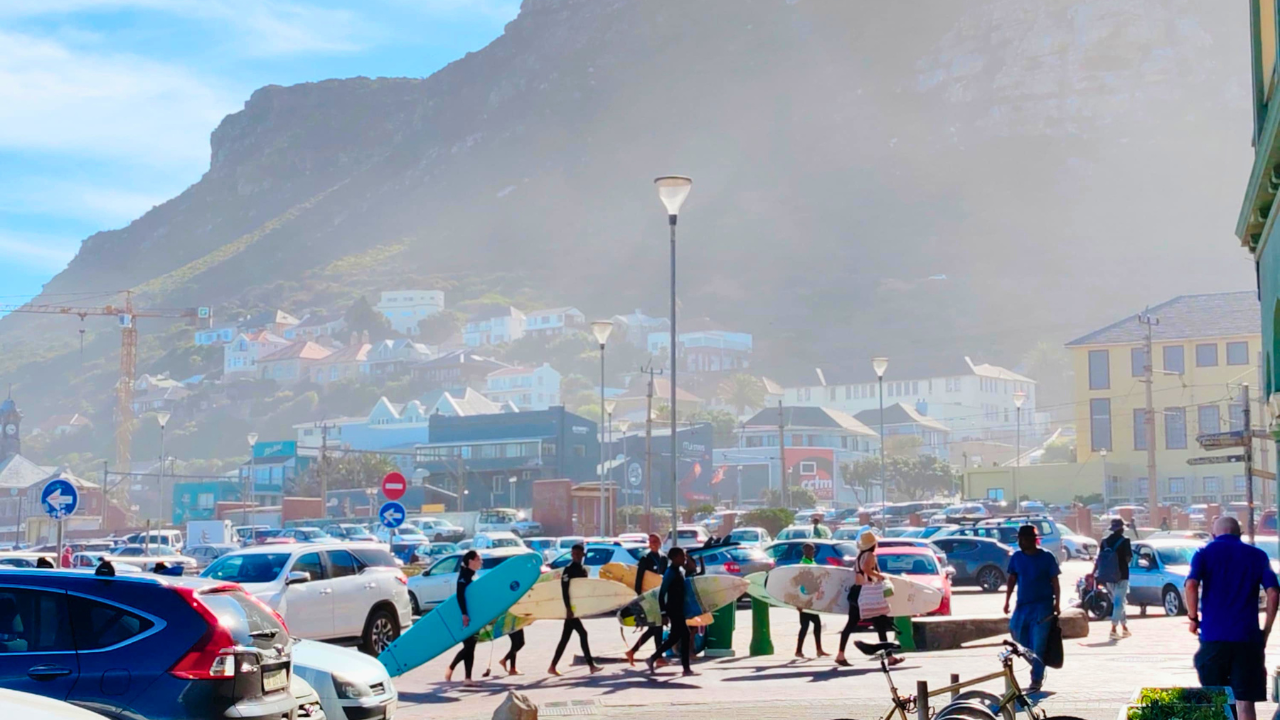
Muizenberg's sandbanks shift constantly. The seabed along this stretch of False Bay is sandy rather than rocky, the banks moving with the swell, the season and the currents, creating and dissolving rideable sections along kilometres of open coastline. On a good day there are multiple wave breaks spread across kilometers of coastline simultaneously, each slightly different, each offering its own rideable section to a different pocket of surfers. The scene from the promenade tells the story clearly: surfers spread across what looks like the entire bay, spread not because they are lost but because the beach genuinely gives them that much space to work with. Understanding the break made me realise why Muizenberg is actually the perfect surf destination.
How the wave works, and why beginners do so well here
The gradual slope of Muizenberg's sandbanks does something to the character of the wave that makes this beach unlike almost anything else along the South African coast.
When a wave breaks over a slowly rising bank, it peels rather than pitches. Instead of rearing up and collapsing in one sharp, powerful motion, the wave unrolls along its face in a long, relatively unhurried arc, giving a surfer time to read it, get to their feet, and actually experience the ride. The difference between a wave that allows two seconds and one that allows 10 is enormous for a beginner, the difference between a wipeout and the moment everything clicks.
The wave also reforms. After breaking for the first time the whitewater settles, the remaining energy reorganises, and the wave breaks again further in, sometimes a third time before it reaches the sand. This creates stacked zones across the same stretch of water: the shallows for those just finding their feet in the whitewater, the middle section for surfers catching the reforming wave with a little more shape and power, and the outer break for those ready for a full, clean ride. The beach accommodates all of them at once, which is why Muizenberg looks so alive from the shore and why people at such different levels can share it so comfortably.
The surf culture at Muizenberg, and why it matters
There is an entire culture in surfing that people who have grown up away from the ocean are rarely aware of, and understanding it puts Muizenberg's atmosphere into sharp focus.
At competitive surf breaks, access to waves is governed by strict unwritten rules. The surfer positioned closest to the peak of a breaking wave has right of way, and anyone who paddles for a wave already claimed by someone else has committed the cardinal sin of dropping in. At popular reef breaks, particularly those with a single defined peak and a tight, experienced lineup, this hierarchy is enforced with real conviction. Localism, the territorial protection of waves by those who surf a spot regularly, is a genuine feature of surf culture around the world, and for someone learning to surf, paddling out into an established lineup can feel actively unwelcoming before a single wave has been caught.
Muizenberg has built its identity on something different. The abundance of breaks spread across the beach means the whole dynamic of the lineup stays open and generous rather than concentrated and competitive. There is enough ocean for everyone, and the culture reflects that. The surf schools, the dawn patrol regulars, the travelling surfers who return every winter, they all share a beach that has always understood itself as a place where people come to learn, to improve, and to enjoy being in the water. That atmosphere is one of Muizenberg's most underrated qualities, and for a first-time surfer it matters enormously.
Surf schools, board hire and what a lesson costs
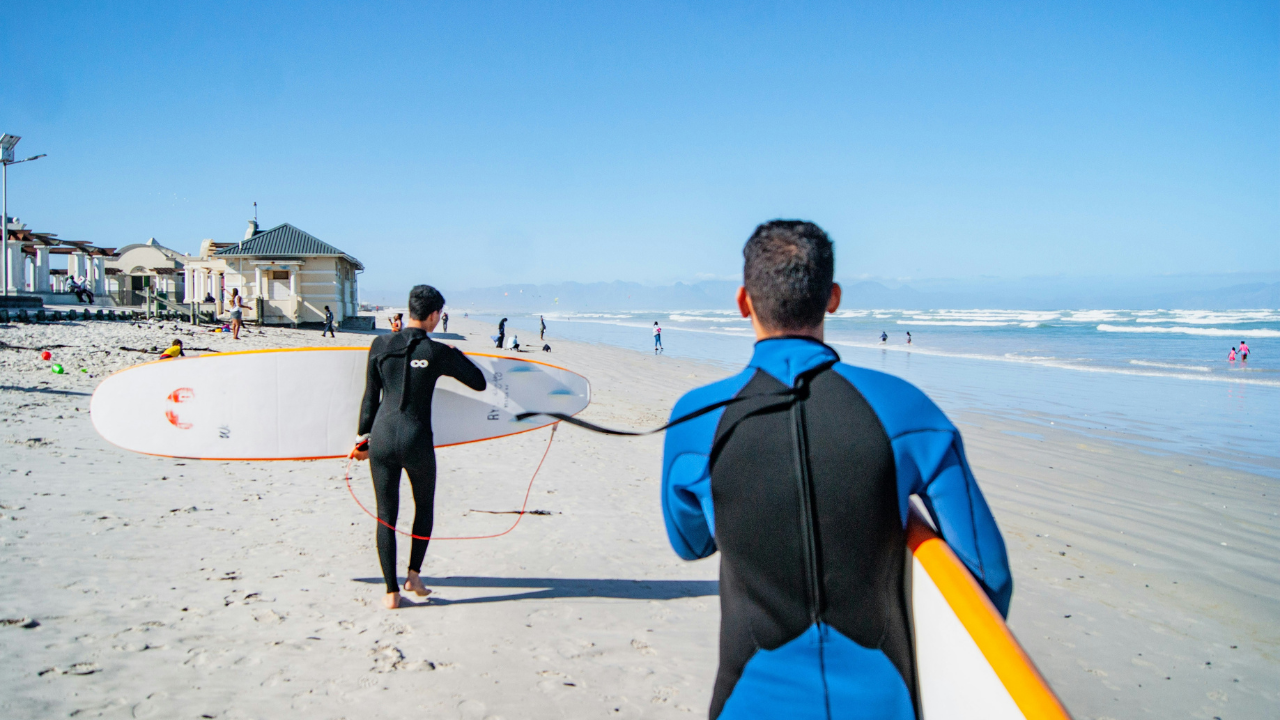
Muizenberg's beachfront has more surf schools per kilometre than almost anywhere in South Africa, and the competition between them keeps the quality high and the prices reasonable. Most schools operate from Surfer's Corner along Beach Road, and all of them include board and wetsuit hire in the lesson price.
Gary's Surf School has been running since 1989 and is the longest-established school on the beach. Group lessons run for about an hour with the instructor followed by a further hour of practice time with the equipment. Surf Emporium is run by nine-time South African champion Roxy Davis and offers both once-off lessons and a structured weekly Learn 2 Surf programme for those staying longer. Surfshack sits at Surfer's Corner and caters to beginners through to intermediate surfers, with both private and group sessions available daily. Reef surf shop also offers lessons and board hire.
Group lessons generally cost between R500 and R650 per session. Private lessons range from R750 to R1,000. Board and wetsuit hire for those who want to surf independently runs from around R150 to R250 for two hours. Lesson times follow the tide rather than a fixed schedule, so schools will confirm your session time the day before or morning of.
Sharks: what you actually need to know
There are sharks in False Bay, including great whites, and drone footage of them moving through the lineup at Muizenberg circulates on social media with enough regularity to give the impression of constant danger. The reality is considerably more measured. The great white population along this stretch of coast has shifted over recent years, influenced partly by increased orca presence in South African waters, but sharks have been part of this bay for as long as people have been surfing here.
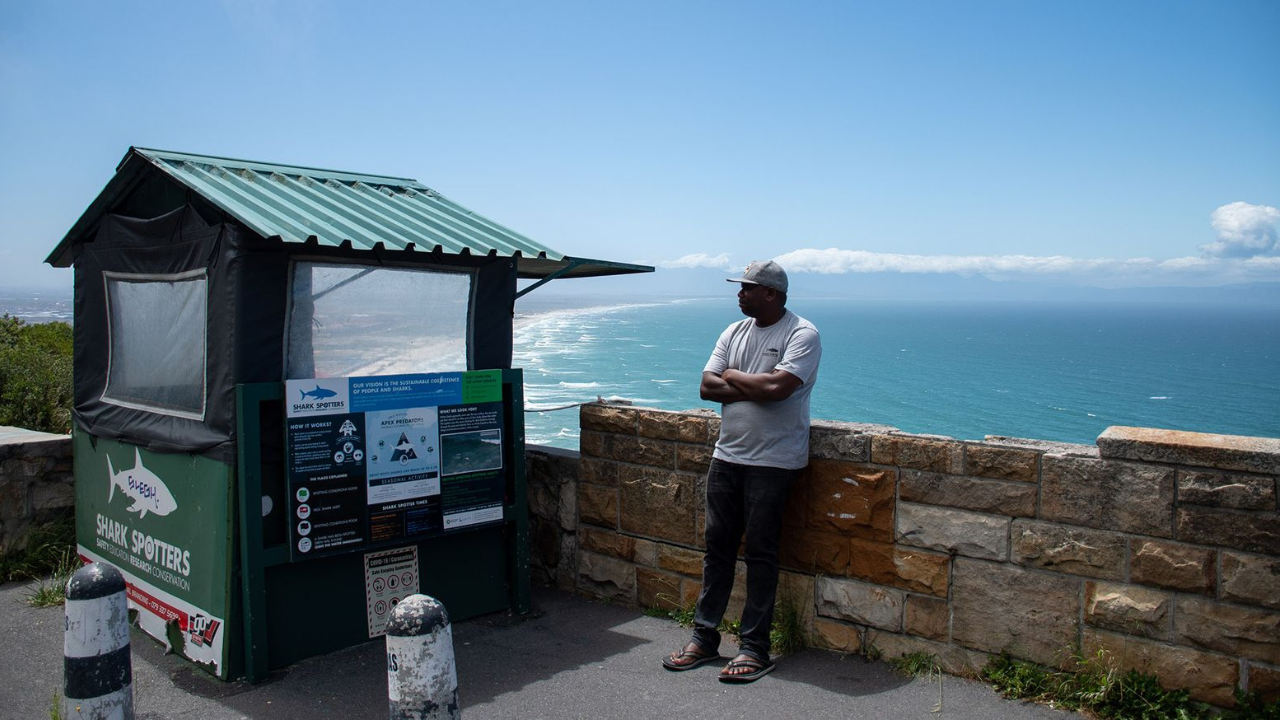
What distinguishes Muizenberg is the shark spotting programme, one of the most established and well-resourced of its kind in the world. Trained spotters work from the hillside above the beach with clear sightlines across the bay, operating a flag and siren system that clears the water immediately when a shark is confirmed close to shore. The system works, and everyone in the water treats it seriously.
Surfers have been paddling out at Muizenberg for over a century with full awareness that sharks share the bay. The spotting programme, the statistical reality of the risk, and the straightforward awareness that comes with surfing here regularly all combine to make the water feel far safer in practice than the footage might suggest.
Beyond surfing: the South Peninsula as a reason to book flights
Surfing is what draws most people to Muizenberg for the first time. The magic and diversity of the South Peninsula is what keeps them coming back.
The coastal path from Muizenberg through St James into Kalk Bay is the kind of walk that ends up on the highlight reel of a trip regardless of what else happened. Kalk Bay itself sits fifteen minutes along the coast and operates as a kind of compressed best-of: a working fishing harbour that still brings in fresh catch most mornings, a main street lined with galleries, bookshops and restaurants that punch well above their square footage, and a general atmosphere of creative, unhurried life that makes an afternoon there disappear very pleasantly. For surfers, Kalk Bay reef is also worth knowing about: a fast, powerful wave breaking over rock that draws experienced and professional surfers on the right day and is spectacular to watch from the harbour wall even if you have no intention of paddling out. The tidal pools at St James and the sheltered swimming at Fish Hoek offer calm, warm, protected water that is perfect for families and anyone who wants to be in the ocean on their own terms.
Further down the peninsula, Simon's Town carries its naval history with a Victorian main street in excellent condition and Boulders Beach just around the headland, where one of the most accessible African penguin colonies on the continent goes about its business with complete indifference to the people watching from a respectful distance. The drive from Simon's Town to Cape Point cuts through the Cape of Good Hope section of Table Mountain National Park, the fynbos rolling over the mountains on both sides of the road, both coastlines visible from the higher passes, the whole experience carrying the particular feeling of being at the edge of something vast. In winter, southern right whales come into False Bay to calve between June and November, close enough to the shore along the Muizenberg promenade and the St James walkway that watching them requires nothing more than showing up.
A surf trip to Cape Town that builds time in for all of this becomes something much richer than a surf trip.
Getting to Muizenberg
Muizenberg is roughly 25 kilometres from Cape Town International Airport, about 30 minutes by car outside of rush hour. From the City Bowl or V&A Waterfront, the drive takes around 20 to 25 minutes via the M3 and then Main Road through Retreat. There is free street parking along Beach Road near Surfer's Corner, though it fills up on good-weather weekends. A few small paid lots sit closer to the beachfront.
The Southern Line train runs from Cape Town Station to Muizenberg Station, which is a five-minute walk from the beach. The train is scenic (it hugs the False Bay coastline from Fish Hoek) but service reliability varies, so check schedules on the day. Uber and Bolt operate throughout the South Peninsula and are the most practical option for visitors without a car.
Where to stay for a Cape Town surf trip
Staying in Muizenberg places you within the heart of Surfers Corner, the surf schools, the board hire and the miles of consistent waves. Mui Stays has a wide range of apartments and stays here to match almost any kind of surf trip. For beachfront convenience, you can stay in one of the one-bedroom apartments in the Empire building, right on the sand, or in the newly built Wavescapes apartments, which offer that same beachfront position in a fresh, modern setting. For something with more of a local, lived-in feel, there are homely apartments tucked into the village itself, just back from the water.
Beyond Muizenberg, you can stay across the South Peninsula, including Kalk Bay, Simon's Town and Fish Hoek, putting the entire coastline within easy reach for travellers who want to explore beyond the surf.
For surfers travelling in a group or with more experience, the Atlantic side of the peninsula has its own appeal, particularly for kitesurfing and the days when the wind favours that coastline instead. Sunset Bay Stays in Hout Bay offers a five-bedroom retreat with a pool, ocean views from every bedroom and a dedicated workspace for those balancing remote work with their time in the water. Drift Sunset Beach House, on the Atlantic seaboard at Sunset Beach, is a six-bedroom villa just steps from one of the world's most recognised kitesurfing beaches, with two private suites, multiple communal living areas and balconies that take in Table Mountain and the ocean at once.
The South Peninsula rewards staying longer than originally planned. The beach pulls you in on the first morning, and the coastal villages, the mountains and the drive to Cape Point fill the days around it. Most people who come here for the surf find themselves doing the same thing I did six years ago: watching the sun come up over False Bay, telling themselves it is just a week, and quietly working out how to make it longer.