Cape Town winter travel guide 2026: where to stay and what to do along the South Peninsula
Written by Daniel Blaauw
Visiting Cape Town in winter is one of South Africa's most underrated holidays.
Here is why the South Peninsula deserves more of your attention.
There is a ritual that plays out in workplaces across the country with such reliable regularity that most employed South Africans will recognise it immediately. The leave calendar opens, everyone grabs the December dates, and the scramble that follows is fast and merciless. By the time the dust settles, Easter is gone too, then the September school holidays, and winter sits on the calendar largely untouched, passed over in the rush.
The people who have actually cracked it, who come back from holidays genuinely restored, tend to have figured out something the December crowd has not: winter is where the real opportunity lives.
Youth Day on 16 June, Women’s Day observed on Monday 10 August, and Heritage Day on 24 September each sit within a calendar configuration where roughly ten days of annual leave creates close to three uninterrupted weeks away. It also happens to be the point in the year when accommodation rates are at their most accessible, competition for reservations has largely relaxed, and the South Peninsula of Cape Town in particular, is producing some of the finest conditions it generates all year.
Taken as a proper break, a slower working stint, or simply time away long enough to feel restorative, winter on the South Peninsula makes a compelling case for itself. Mui Stays operates a carefully curated collection of properties across the False Bay coastline, from Muizenberg through to Simon’s Town, allowing you to experience different parts of the peninsula while keeping the reassurance that comes with booking through a trusted local brand. Whether staying in one place for several weeks or moving gradually along the coast, guests can expect the same consistent standard of quality, comfort and thoughtful hospitality across the portfolio, making a longer winter stay feel both seamless and genuinely easy to settle into.
In this travel guide, we explore what makes a Cape Town winter on the South Peninsula so rewarding, from where to stay in Muizenberg, Kalk Bay, Fish Hoek and Simon’s Town to the best winter activities, restaurants, coastal drives and long-stay accommodation options across the False Bay coastline.
Key Takeaways:
- Winter is the most overlooked opportunity on the South African leave calendar
- Average winter temperatures on the False Bay coast sit between 14 and 18 degrees
- Southern right whales move through False Bay from June to November
- Winter nightly rates are significantly lower than peak season
- Every town from Muizenberg to Simon’s Town sits within 15 to 20 minutes of the next
- Booking direct at muistays.com saves up to 25% versus third-party platforms
In this Guide:
- What a Cape Town winter actually feels like
- Why winter rates make longer stays more affordable
- Getting around the False Bay coastline
- How to plan a long South Peninsula winter stay
- Where to stay in Muizenberg during winter
- Winter mornings in St James and Kalk Bay
- What to do in Fish Hoek during winter
- Visiting Simon’s Town and Boulders Beach
- Chapman’s Peak, Noordhoek and the Atlantic coastline
- Planning and booking your Cape Town winter accommodation
What Cape Town’s winter season actually offers
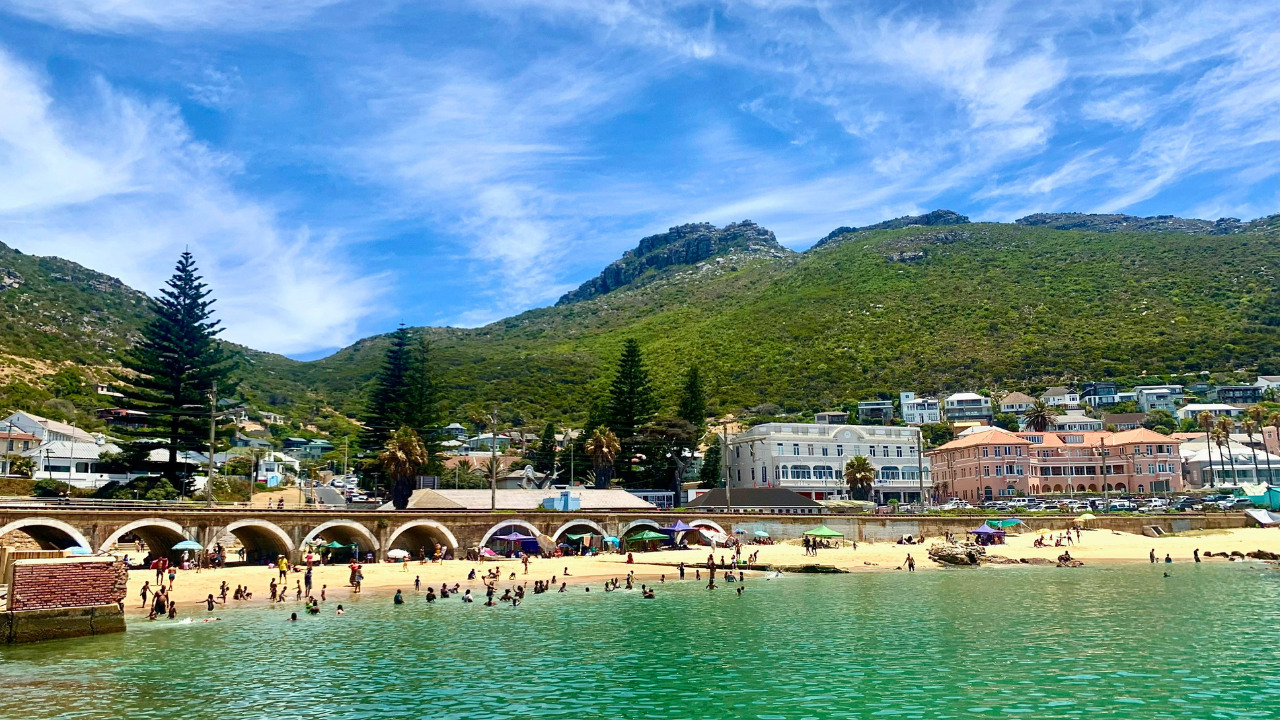
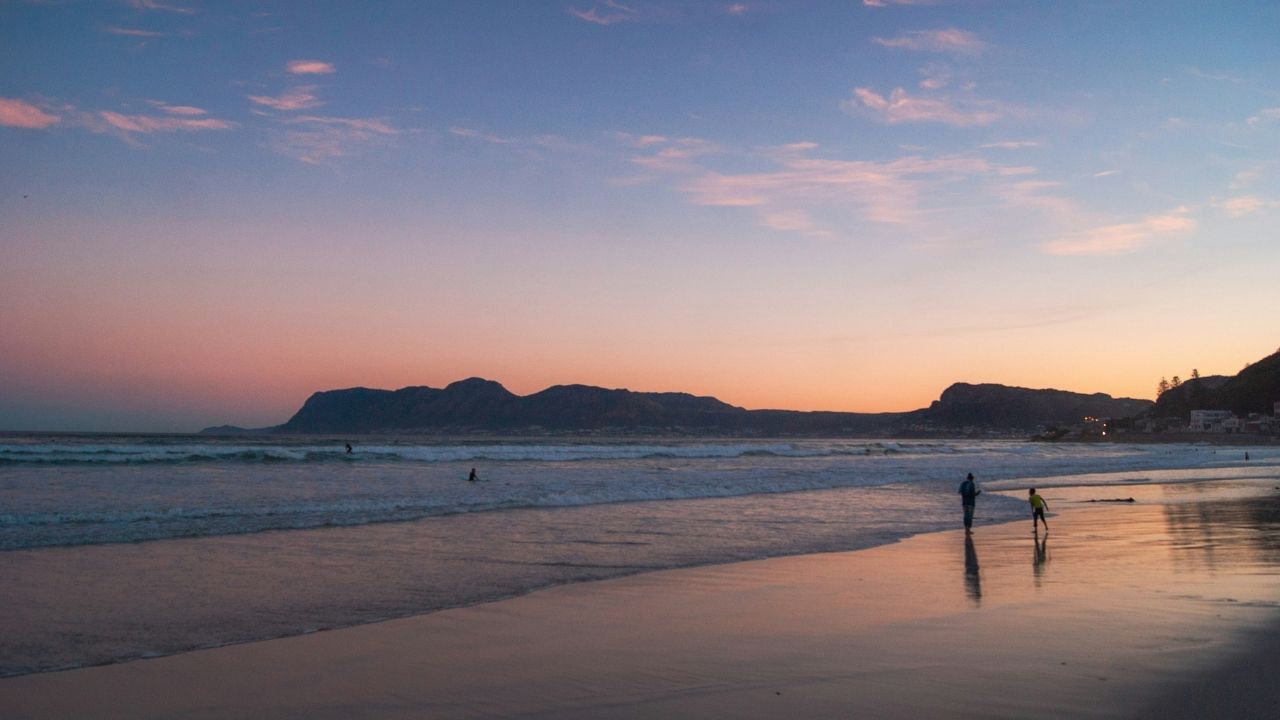
The South Peninsula stretches south from the city between mountain and coastline, with the Atlantic on one side and False Bay on the other. The False Bay coast, from Muizenberg through to Simon’s Town, faces east across a wide mountain-rimmed bay and catches the morning sun in a way that gives it a completely different character to the city-facing Atlantic side.
Winter here consistently surprises visitors arriving from the Highveld. Average days sit between 14 and 18 degrees, clear skies open between passing fronts, and the atmosphere feels far milder than most people expect. The rain, when it arrives, sometimes carries real drama and at other times settles into a fine mist that you can walk through comfortably with the right jacket. In between, the peninsula feels open, calm, and quietly active in a way that peak summer rarely allows.
The swell builds through winter and so does the surf culture along Surfers Corner in Muizenberg, where long, consistent waves have built a reputation as one of the most accessible learn-to-surf breaks on the African continent. Southern right whales move through False Bay from June through to November, coming close enough to the shoreline to be watched without a boat or any particular effort beyond showing up for a fine walk along Boyes Drive.
These are not off-season compromises. They are some of the South Peninsula’s defining experiences, arriving at the exact point in the year when it is easiest to access them.
Why the finances favour a longer stay
Winter rates across Cape Town create opportunities where staying longer becomes more achievable than most people assume. Properties that are difficult to secure in peak season open up at rates that allow for weeks rather than days, and the overall cost of being here settles into something manageable over time.
Self-catering options mean you can keep day-to-day costs manageable, shopping at local markets and cooking in a well-equipped kitchen rather than eating out for every meal. The portfolio spans everything from compact apartments for a solo traveller or couple through to larger properties sleeping six to ten people, well suited to groups splitting costs across a longer stay.
Midweek nights tend to come in lower than weekends, and building flexibility into a stay translates directly into access to properties that weekend-only pricing might put out of reach. Booking directly through muistays.com rather than a third-party platform saves up to 25% on the nightly rate with no platform fees, and across two to three weeks that saving adds up meaningfully.
Getting around the South Peninsula
The South Peninsula is compact enough that transport is simpler than it might first appear. The Metrorail coastal line from Cape Town to Simon's Town is one of those travel experiences that earns its own place in the memory of a trip, with single trips running under R10 and the route hugging the False Bay shoreline for much of its length. On a clear winter morning with the bay flat and the mountains behind Muizenberg catching the early light, it is one of the more quietly beautiful commutes available anywhere in the country. Reliability varies and a backup plan is sensible, but the train is worth doing for its own sake, and for movement between Muizenberg, St James, Kalk Bay, Fish Hoek and Simon's Town it works well enough to build a day around. Uber operates reliably along the coast at rates that remain genuinely affordable, and the peninsula has a well-established cycling community with the relatively flat coastal road lending itself to a morning out on a bike.
Walking, though, is the mode of transport the peninsula rewards most generously. Muizenberg, Kalk Bay and Simon's Town are each properly walkable within themselves, and the coastal mountain path along
Boyes Drive connecting them offers one of the more spectacular walks on the peninsula, with views across the full sweep of False Bay below. Walking from Muizenberg through to Simon's Town and catching the train back is the kind of afternoon that becomes a fixed point in the memory of a longer stay. For the Atlantic side, a car or Uber opens things up considerably. Cape Town International Airport sits approximately 30 minutes from Muizenberg along a route that avoids the city centre entirely.
How to plan three weeks in Cape Town
A stay on the South Peninsula affords a looser approach than most trips. Every town between Muizenberg and Simon's Town is reachable from any other within 15 to 20 minutes, which means the pressure to be in the right place at the right time largely dissolves. Anchor yourself somewhere long enough to feel at home, then move when the mood shifts, or stay put and let the peninsula come to you through day trips and unhurried afternoons.
A three-week shape that works especially well: begin with a week to ten days in Muizenberg, long enough to settle into the surf rhythm and explore St James and Kalk Bay properly. Move south to Fish Hoek from there, with Glencairn, Noordhoek and Hout Bay from that base. Spend the final days back toward Muizenberg, close to the airport, with the satisfying full-circle quality of returning somewhere familiar with three weeks of coastline under your belt. Winter availability is open enough that a degree of spontaneity is possible throughout, and booking direct at muistays.com secures the best rate at each stop.
Muizenberg
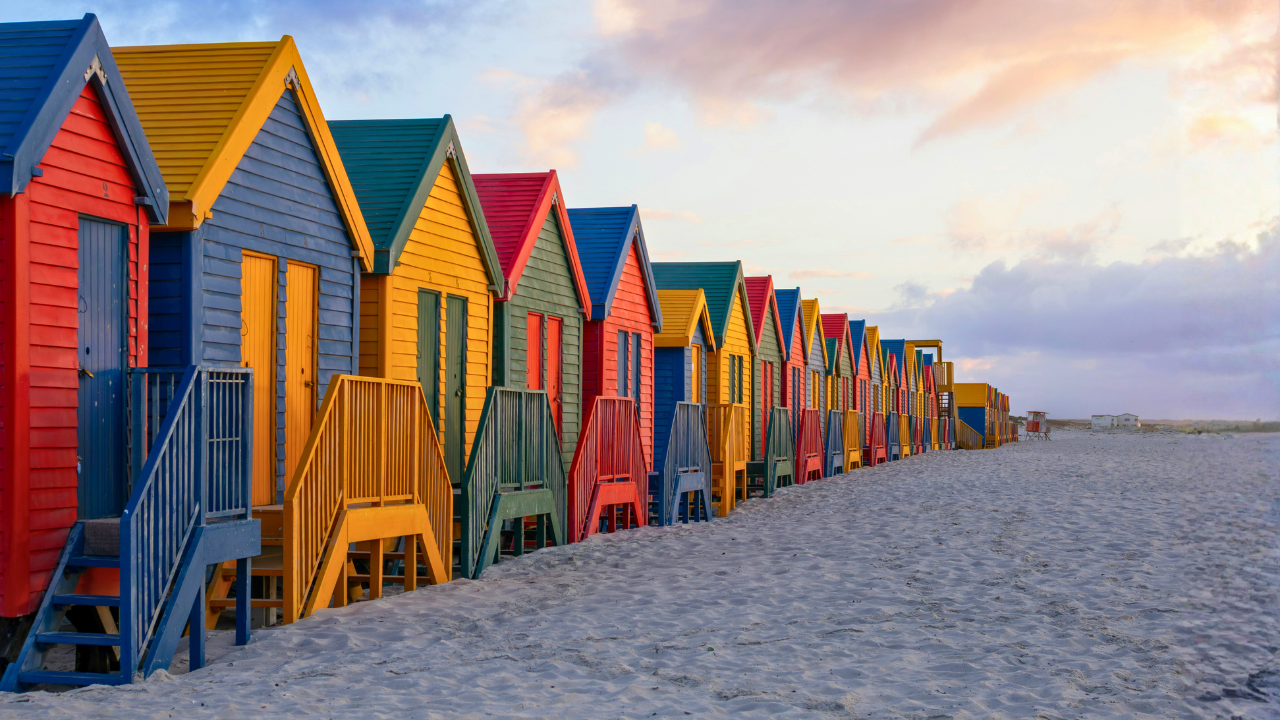
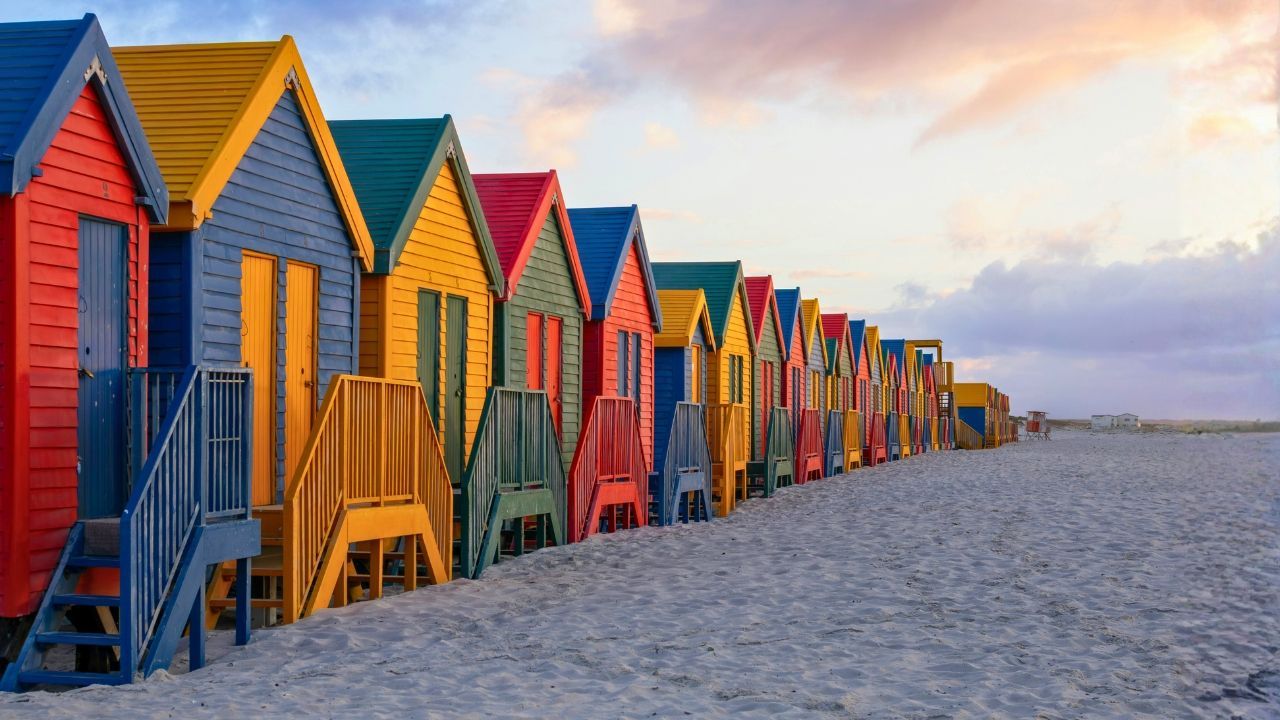
Africa’s oldest surf town announces itself in vivid colour. The Victorian beach huts along the shoreline have become one of the most photographed stretches of coastline in the world. Behind them the mountain rises steeply, and in front, Surfers Corner runs with a consistency of wave that has been drawing people here since long before anyone thought to photograph it.
Muizenberg works particularly well for a longer stay, carrying the largest concentration of accommodation along the False Bay coast, including most established coffee shop and restaurant culture along the bay. It takes about three days to start feeling like a local and about a week to not want to leave.
The waves at Surfers Corner are long, consistent and forgiving, shaped by the geography of the bay in a way that makes them ideal for learning and for building real confidence in the water. Surf schools along the beach, including
Nexgen,
Roxy Surf School and
Lifestyle Surf, offer lessons with a surf coach, board and wetsuit hire for around R500 a session. Alternatively, you can just hire a board and wetsuit for R110 for 90 minute, when you get the hang of it. In winter the swell adds enough energy to keep all surfers genuinely engaged.
Best Coffee shops in Muizenberg
- Hans and Lloyd remains one of the strongest winter morning options on the coastline, with its indoor fireplace, micro-roastery and excellent post-surf breakfasts.
- Hang Ten Cafe sits almost directly on the beachfront and works well for a quick coffee before the water.
- Harvest Cafe and Empire Cafe on York Road are reliable choices for longer mornings with good coffee and steady WiFi.
- Joon in the village shifts comfortably between daytime coffee stop and relaxed evening pizza spot.
Restaurants in Muizenberg
- Dimples Dumpling House brings real personality to the village with handmade dumplings, bao and ramen served in a courtyard that feels especially good on colder evenings.
- Tortuga Loca on Main Road is a sustainable Mexican and Latin American restaurant covering the casual end of the evening with real conviction.
- Carla's Mozambican on York Road with its fresh prawns has been an institution along this stretch long enough to have earned that description without qualification.
- NY Slice and the Vietnamese Street Kitchen, both on Main Road fill in the gaps for a quick bite.
- The Commons covers vegetarian and vegan dining with a view directly over Surfers Corner.
- On the nights when the weather has turned properly wild, Tiger's Milk and Hudsons are both on the doorstep and have a warm indoor vibe.
Things to do in Muizenberg
- The Bluebird Garage Market on Thursday and Friday evenings brings food, music and a communal atmosphere that makes winter nights feel unexpectedly festive.
- The walk along Boyes Drive toward Kalk Bay remains one of the finest free experiences on the peninsula, particularly on clear mornings with the full sweep of False Bay below.
- Hot Huts operates mobile sauna sessions along the coastline, and after a cold surf the combination feels almost absurdly good.
Weekly winter rates in Muizenberg start from around R5,000 for a well-located apartment sleeping two, through to the R20,000 range for larger properties sleeping up to ten, all serviced throughout.
A stay at the Beach Loft in Empire building you right on Surfers Corner, making it especially well suited to travellers who want to make the most of good beach days.
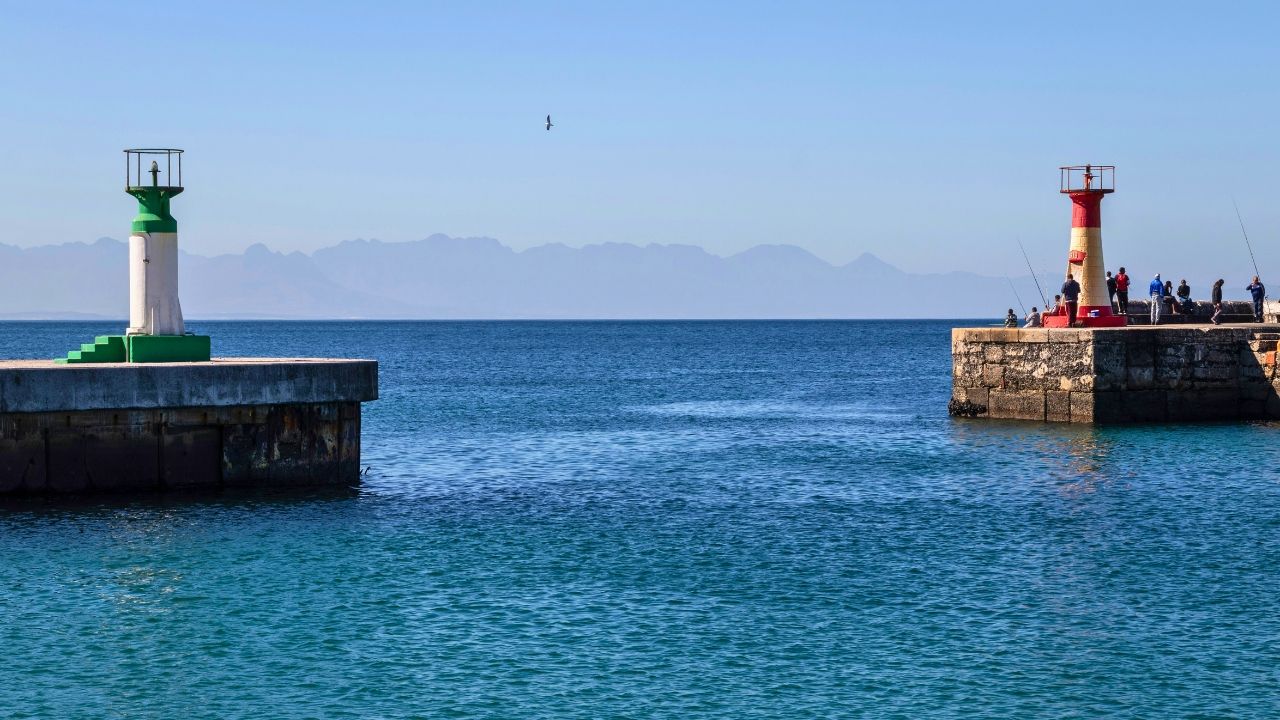
St. James and Kalk Bay
St. James sits close enough to Muizenberg that the walk between them has become a natural morning ritual for regulars, yet the atmosphere changes almost immediately once you arrive. Where Muizenberg carries surf culture and movement, St. James feels quieter and more composed, with its tidal pool tucked below the railway line and a small row of beach huts echoing Muizenberg’s famous colours at a gentler scale.
Further along the coast, Kalk Bay unfolds against the mountain in layers of painted buildings, narrow stairways, antique stores, galleries and restaurants that have accumulated genuine character over decades. The harbour remains a working one, which gives the town a texture many coastal destinations eventually lose.
Kalky’s on the harbour wall has been serving fish and chips long enough that the queue outside it on a good afternoon is its own kind of recommendation. The harbour walk on a winter morning, with fishing boats moving through the mist, the seals and seagulls setting the scene, stays with you longer than most things that cost money.
Coffee in St. James and Kalk Bay
- Olympia Cafe has anchored the Kalk Bay strip since 1997, with a blackboard menu built around what is fresh and seasonal.
- Sirocco sits beside the station under a towering palm, with the old SA Railways dining carriage becoming an especially good refuge when the weather turns.
- Ohana occupies one of the most dramatic positions on the coastline, directly above the railway tracks with the ocean immediately below.
Dining options
- Harbour House remains the occasion dinner on this side of the peninsula, with floor-to-ceiling windows over the water and fresh seafood handled with real care.
- Salt consistently ranks among the strongest restaurants on the South Peninsula, balancing long lunches and slower evening dinners equally well.
- Satori continues to hold its place as the reliable Italian option, with wood-fired pizzas and good pasta.
- Cape to Cuba carries cocktails, harbour views and enough atmosphere to stretch a dinner comfortably later into the evening.
Activities and things to do
- Studio Muse above Olympia runs therapeutic pottery classes on Tuesday and Thursday evenings.
- Kalk Bay Books, frequently described as the bookshop with the best view in the world, rewards at least an hour of wandering on almost any afternoon.
- The antique dealers and small galleries along Main Road suit the slower pace that longer stays allow.
- The clifftops above St James and the harbour wall in Kalk Bay both become excellent whale-watching points during the season.
A stay at
Sea Peep studio places you within walking distance of the harbour, Olympia Cafe, the tidal pools and the main road itself, making Kalk Bay particularly rewarding for travellers wanting to spend days at a time moving almost entirely on foot.
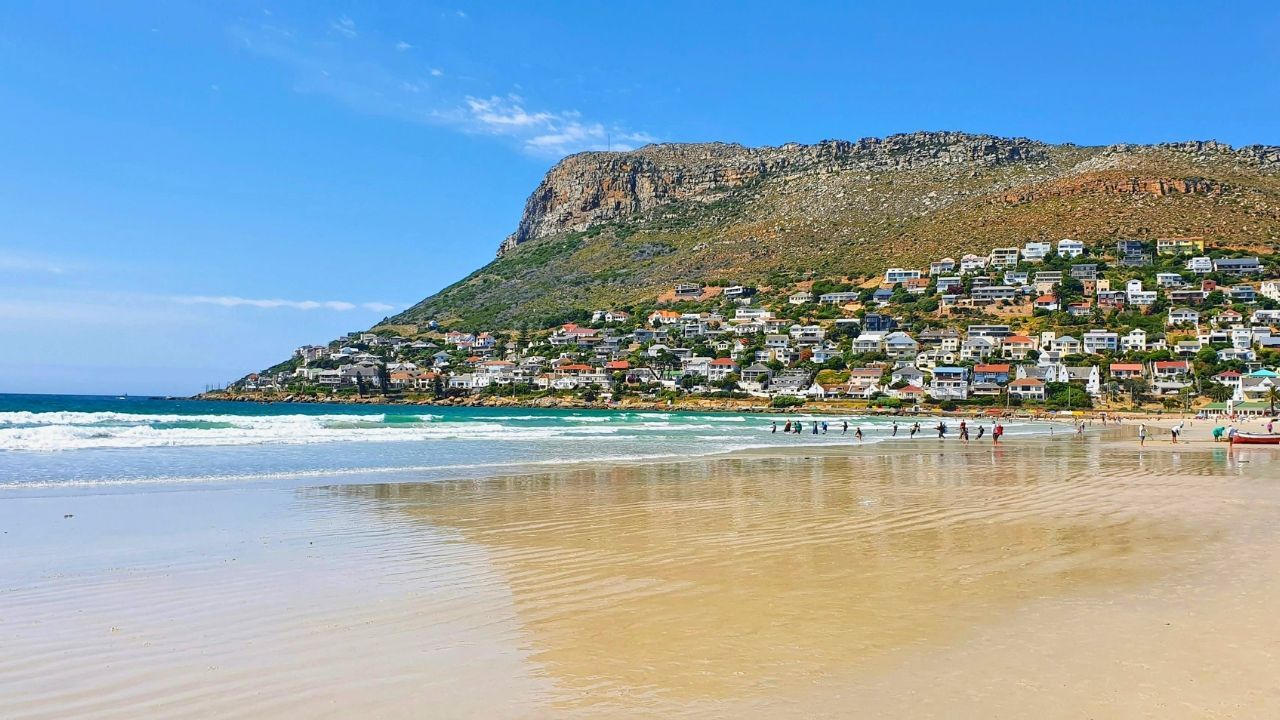
Fish Hoek
Fish Hoek tends to be underestimated, which suits the people who know it well. The beach here is one of the longest and most sheltered on the peninsula, facing north-east across the bay in a way that produces calmer, more genuinely swimmable water than the rest of the coastline manages during winter.
The whale watching from
Fish Hoek is among the best in the bay. Southern right whales move through the waters from June through to October, and the Elsie’s Peak trail above the town offers views that will genuinely change your life. Sea kayaking and stand-up paddleboarding operate comfortably within the sheltered bay, while the surrounding mountains open into hiking routes that feel greener and more dramatic during the wetter months.
Coffee and local spots
- Peak Cafe remains the most reliable option for a slower morning or a working session with good coffee.
- Chalk and Cheese and C’est La Vie handle the day-to-day rhythm of the town well, particularly for takeaway coffee and lighter breakfasts.
Things to do
- Glencairn, tucked between Fish Hoek and Simon’s Town, is one of the quieter beaches on the peninsula, shallow, calm and often almost empty during winter.
- Silvermine Nature Reserve opens into hiking routes through winter fynbos at its most lush, with views across both sides of the peninsula from the upper trails.
- On colder afternoons, Constantia sits only 25 minutes away, bringing some of the oldest wine estates in South Africa into easy reach.
Fish Hoek works especially well for travellers wanting slightly more space and a quieter pace without losing access to the rest of the coastline. A stay at Glen Heights sleeping up to 6 places you close to Glencairn and the mountain routes above the bay.
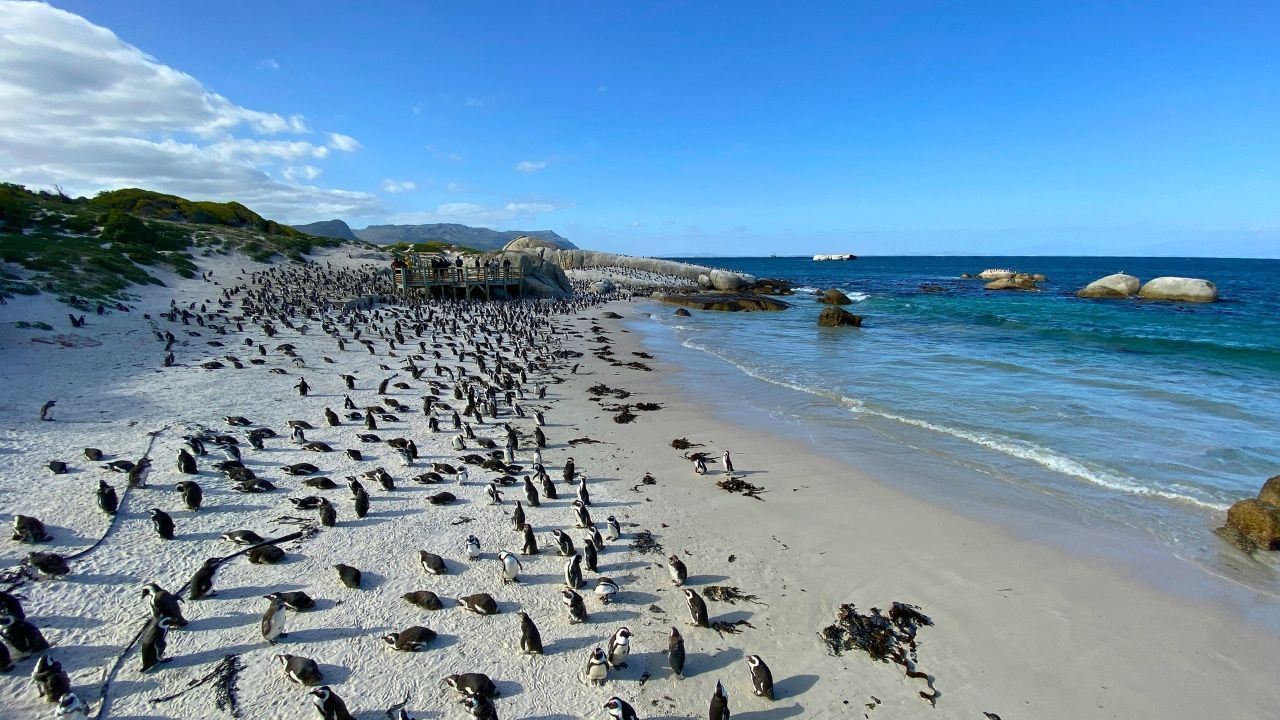
Simon’s Town
Simon’s Town sits at the southern end of the False Bay coastline with the quiet permanence of a town shaped over generations by life around the harbour and a community that still feels deeply connected to the coastline around it.
The oldest naval base in the southern hemisphere occupies the harbour, and the Victorian buildings along the waterfront carry a scale and solidity the other peninsula towns do not quite replicate.
The pace here is genuinely slower. Independent shops line the main road, the harbour sits directly beneath the mountain, and the curve of False Bay opens out in front of the town in a way that gives even ordinary afternoons a sense of occasion.
Boulders Beach, just beyond the town centre, remains one of the defining experiences of the South Peninsula. The African penguin colony here is one of the only land-based colonies in the world, and visiting during winter changes the experience entirely. The boardwalks quieten down, the colony settles into a calmer rhythm, and the chance to watch the penguins properly rather than through the movement of a crowd becomes something genuinely memorable.
The
Scratch Patch Mineral World nearby, the naval museum on the waterfront, and the historical architecture along the main road make Simon's Town a place that rewards more than a single afternoon. Sundowners from the waterfront, with False Bay catching the last light and the mountain going dark behind the town, are worth planning a day around.
Coffee and slower afternoons
- Vida e Caffe remains the most reliable setup for a focused morning with coffee and WiFi.
- Baker and Bean and The Lighthouse Cafe offer something more local and unhurried around the harbour.
A stay at
Timbers Ocean House sleeping 6 places the harbour, Boulders Beach and the southern coastline within easy reach, making Simon’s Town especially rewarding for travellers wanting to slow the pace down properly toward the end of a longer stay.
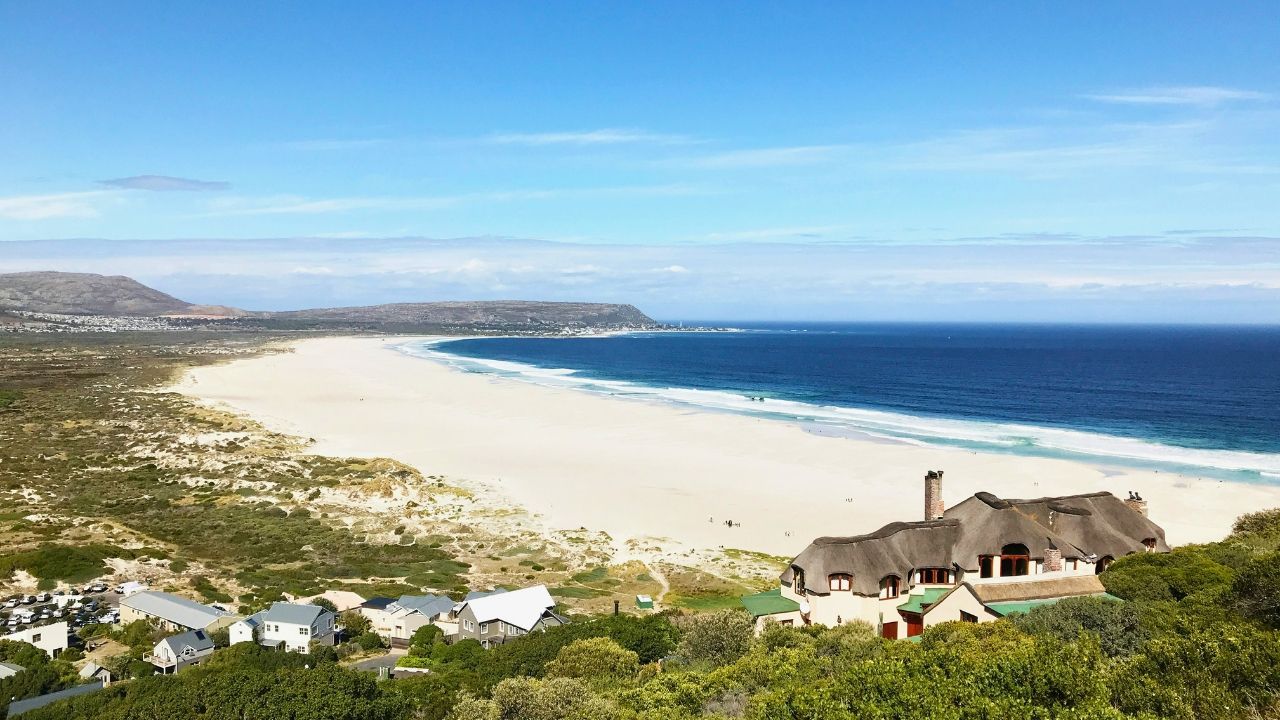
The Atlantic side: Noordhoek, Hout Bay and Chapman's Peak
If the False Bay side is where you settle into the rhythm of the South Peninsula, the Atlantic side is where you remember how dramatic this stretch of coastline actually is.
Chapman’s Peak Drive remains the centrepiece, a road carved directly into the cliffside above the Atlantic with sweeping drops and views that genuinely stop conversations mid-sentence. In winter the road quietens down, the light sharpens, and the drive between Noordhoek and Hout Bay becomes one of the most spectacular afternoons available anywhere on the peninsula.
Noordhoek’s Long beach feels almost wild during winter, wide, pale and often nearly empty apart from horseback riders and the occasional surfer moving through the Atlantic swell. The Noordhoek Farm Village rewards a slower afternoon, anchored by The Foodbarn, chef Franck Dangereux’s Mediterranean-inspired restaurant and tapas bar.
Hout Bay carries a different energy entirely, with a working harbour that still smells and sounds like one. The Bay Harbour Market remains worth timing a visit around for the food, local craft and live music, particularly on colder evenings when the indoor atmosphere settles in properly.
The Mui Stays property collection extend across the Atlantic side too. Palmcove Stay offers a quieter Noordhoek setting for up to 4 travellers wanting more time on the western coastline, while groups up to 10 can enjoy a villa like Sunset Bay Stays in Hout Bay make extended winter trips considerably more accessible when costs are shared across friends or family.
Further south, Kommetjie, Scarborough and Misty Cliffs begin to feel increasingly remote in the best possible way, with Atlantic sunsets and near-empty roads creating the sense that you have reached the far edge of the peninsula entirely.
How to plan a Cape Town winter stay
A winter stay on the South Peninsula has a way of shifting from a short escape into something far more restorative once you give it enough time. The slower pace, lower winter rates, quieter coastline and easy movement between Muizenberg, Kalk Bay, Fish Hoek and Simon’s Town create a version of Cape Town that feels considerably more liveable than the peak-season experience most visitors know. What begins as a holiday often ends with people wishing they had stayed longer.
Booking directly through muistays.com saves up to 25% on the nightly rate compared to third-party platforms, with no additional platform fees. Across two to three weeks, that difference becomes meaningful enough to shape the trip itself, whether that means extending the stay, upgrading the property, or simply arriving with more freedom built into the experience.
Browse the full Mui Stays property portfolio and plan your South Peninsula winter stay directly at muistays.com.
Frequently asked questions about visiting Cape Town in winter
Is Cape Town worth visiting in winter?
Cape Town's South Peninsula is one of the most rewarding parts of the country to visit in winter. Average temperatures sit between 14 and 18 degrees on the False Bay coast, winter whale watching runs from June through November, and accommodation rates drop well below peak season pricing. The quieter beaches, open restaurants and easier access to popular attractions make winter a genuinely appealing time to visit.
What is the weather like in Cape Town in winter?
Winter in Cape Town runs from June through August, with cool days averaging 14 to 18 degrees along the False Bay coast. Rain arrives with cold fronts, sometimes heavy and dramatic, other times as a light mist. Clear, sunny days open between fronts, and the False Bay side of the peninsula tends to feel milder than the Atlantic side.
Can you surf in Cape Town in winter?
Winter produces some of the best surfing conditions along the False Bay coast. The swell builds through the season, and Surfers Corner in Muizenberg offers consistent, forgiving waves suited to all levels. Surf schools operate year-round, with board and wetsuit hire available from around R110 for 90 minutes.
When is whale season in Cape Town?
Southern right whales move through False Bay from June through to November. The coastline between Fish Hoek and Simon's Town offers particularly good shore-based whale watching, and Boyes Drive between Muizenberg and Kalk Bay provides elevated views across the bay.
Is it cheaper to visit Cape Town in winter?
Winter accommodation rates are significantly lower than peak season. Self-catering apartments in Muizenberg start from around R5,000 per week for two people, and booking directly through muistays.com saves up to 25% compared to third-party booking platforms.